





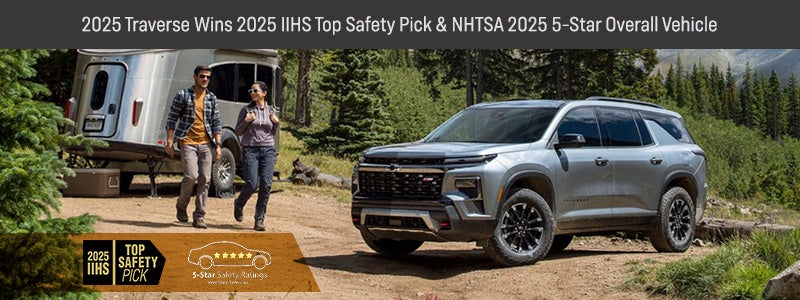
At Bennington Chevrolet, we’ve always known the Traverse was something special—and the experts agree. The all-new 2025 Chevrolet Traverse has officially earned both the IIHS 2025 Top Safety Pick and the NHTSA 5-Star Overall Vehicle Score—putting it in a league of its own when it comes to peace of mind.
That’s more than just bragging rights. It’s proof that the Traverse blends rugged performance with cutting-edge safety tech in a way that few midsize SUVs can.
So, What Does It Take to Earn Top Safety Pick?
A lot. To even qualify for the 2025 IIHS Top Safety Pick, a vehicle must ace multiple crash tests—including the small overlap front, updated side, and moderate overlap front tests. The 2025 Traverse passed with flying colors. But that’s not all.
It also had to show effective pedestrian front crash prevention, a critical feature for city driving and school-zone safety, plus come standard with good- or acceptable-rated headlights—ensuring visibility and security no matter the road or time of day.
NHTSA 5-Star Overall Vehicle Score? That’s the Gold Standard
The National Highway Traffic Safety Administration’s 5-Star Overall Vehicle Score represents the highest overall safety rating a vehicle can achieve in the U.S.—and the 2025 Traverse nailed it. That means it’s not only built to perform, but it’s also designed to protect what matters most: you and your passengers.
Safety Isn’t the Only Highlight
Sure, it’s exceptionally safe—but the all new Traverse also knows how to have fun. Whether you're heading out for a ski weekend in the Green Mountains or road-tripping with the family across New England, there's a Traverse for every type of driver.
- Traverse Z71: A true off-road warrior with all-terrain tires, twin-clutch AWD, skid plates, and rugged styling—perfect for Vermont’s backroads.
- Traverse RS: Bold street style meets tech-forward luxury, with features like Super Cruise™, a panoramic sunroof, ambient lighting, and RS-exclusive blacked-out accents.
No matter which model you choose, the Traverse is packed with driver-focused tech, comfort, and confidence.
Explore the 2025 Traverse at Bennington Chevrolet
If you’re looking for an SUV that’s as safe as it is stylish, the 2025 Traverse is your answer. Visit Bennington Chevrolet at 24 Performance Drive in Bennington, VT—just a short drive from North Adams and Manchester—to test drive the award-winning Traverse today. Let our team help you find the trim that fits your life and adventure style.
Safety. Capability. Style. The 2025 Chevy Traverse doesn’t make you choose—it gives you everything.